SBEE Digital: Electricity Access Platform for Benin
Many residents in Benin lack affordable electricity due to a complex application process. We designed a web and mobile platform that digitizes and streamlines applications, tracking, and SBEE employee oversight.
- Problem
- Benin’s electricity connection process is lengthy and hard to navigate. Applicants, many with low digital literacy, face unclear requirements, inconsistent communication, and long delays.
- My role
- I designed multi-platform application workflows across all three roles (applicants, agents, and supervisors), optimized for low-literacy users, and built the personas, journey maps, and end-to-end user flows for each role.
- What I did
- Weekly requirements reviews with the client · personas for applicants and SBEE employees · journey maps · low-fi wireframes · design system · high-fi web + mobile screens for 3 user roles
- Key decision
- Design one platform with separate experiences for applicants, agents, and supervisors, not just a digital application form, because delays came from handoffs between applicants and SBEE staff as much as from the form itself.
- Outcome
- Delivered responsive web and mobile designs for 3 user roles, journey maps, and a design system, ready for handoff. The platform hasn’t been built yet, so impact isn’t measured.
- Success metrics
- Application processing time · reported delays · households connected to electricityMetrics we defined to measure success, not results achieved yet.
Challenge
Over 6 million residents in Benin are unable to afford electricity access, and the existing application process is lengthy, mismanaged, and difficult to navigate. Many applicants have low digital literacy, which makes online or technology-based processes even more challenging. They face unclear requirements, inconsistent communication, and long delays, creating major barriers to obtaining a connection.
Outcome
We delivered designs that digitize the electricity application and installation process for applicants and SBEE staff:
- 3 user roles: applicants, agents, and supervisors, each with their own flows
- Web + mobile: responsive high-fidelity screens for the full experience
- Design system: tailored to users with low to moderate digital literacy
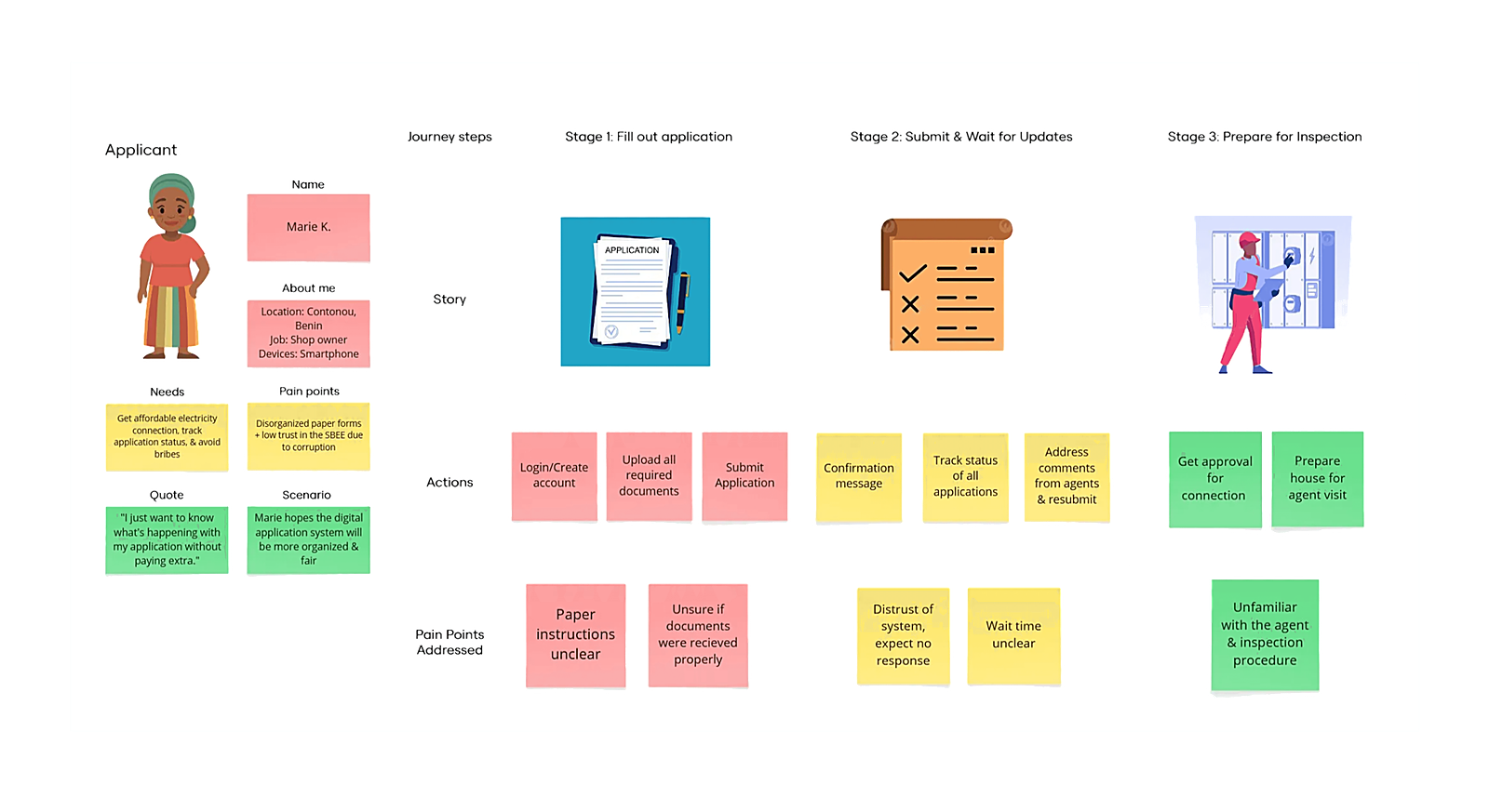
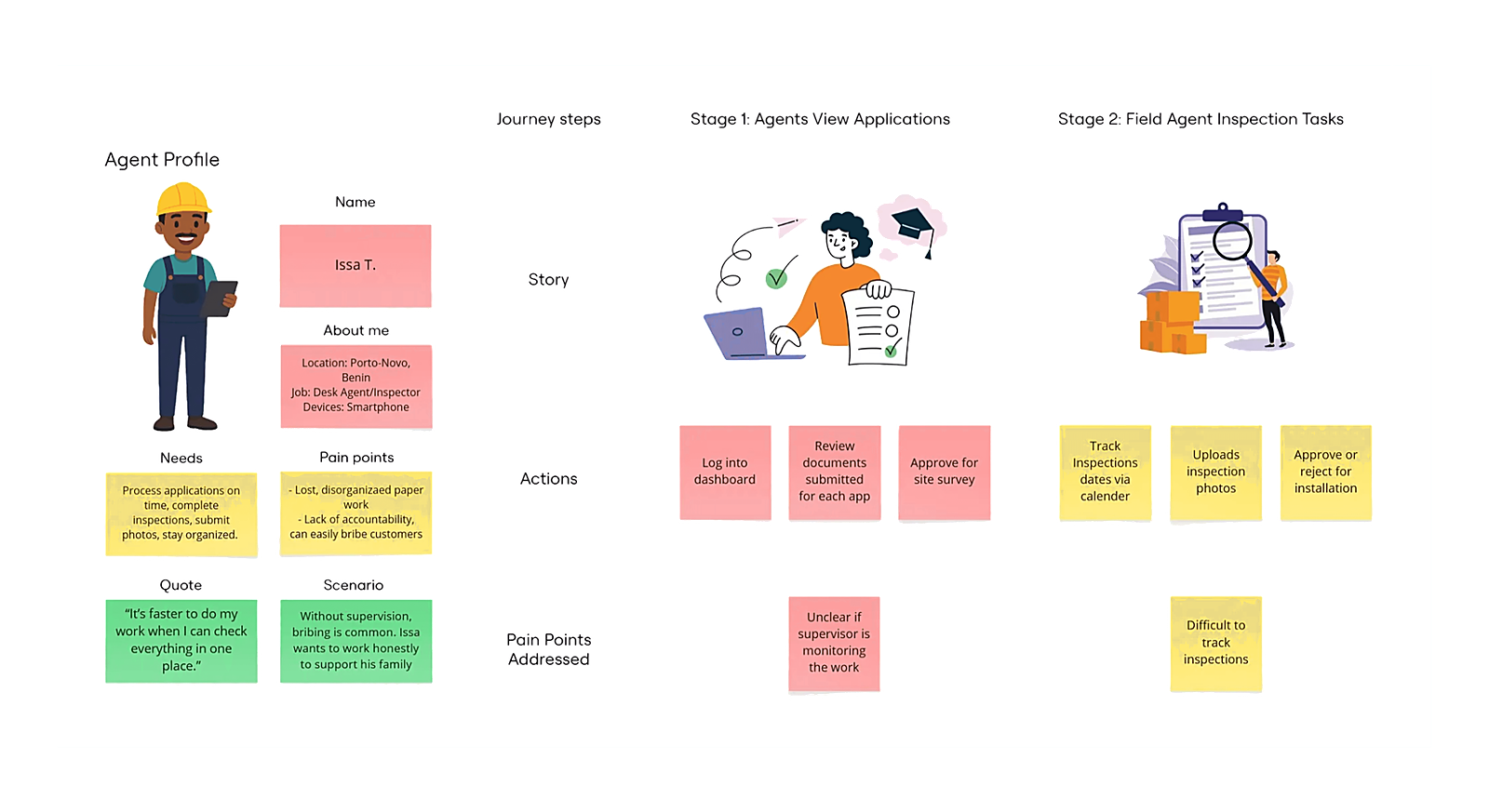
- Journey maps: for applicants and SBEE employees across application and installation
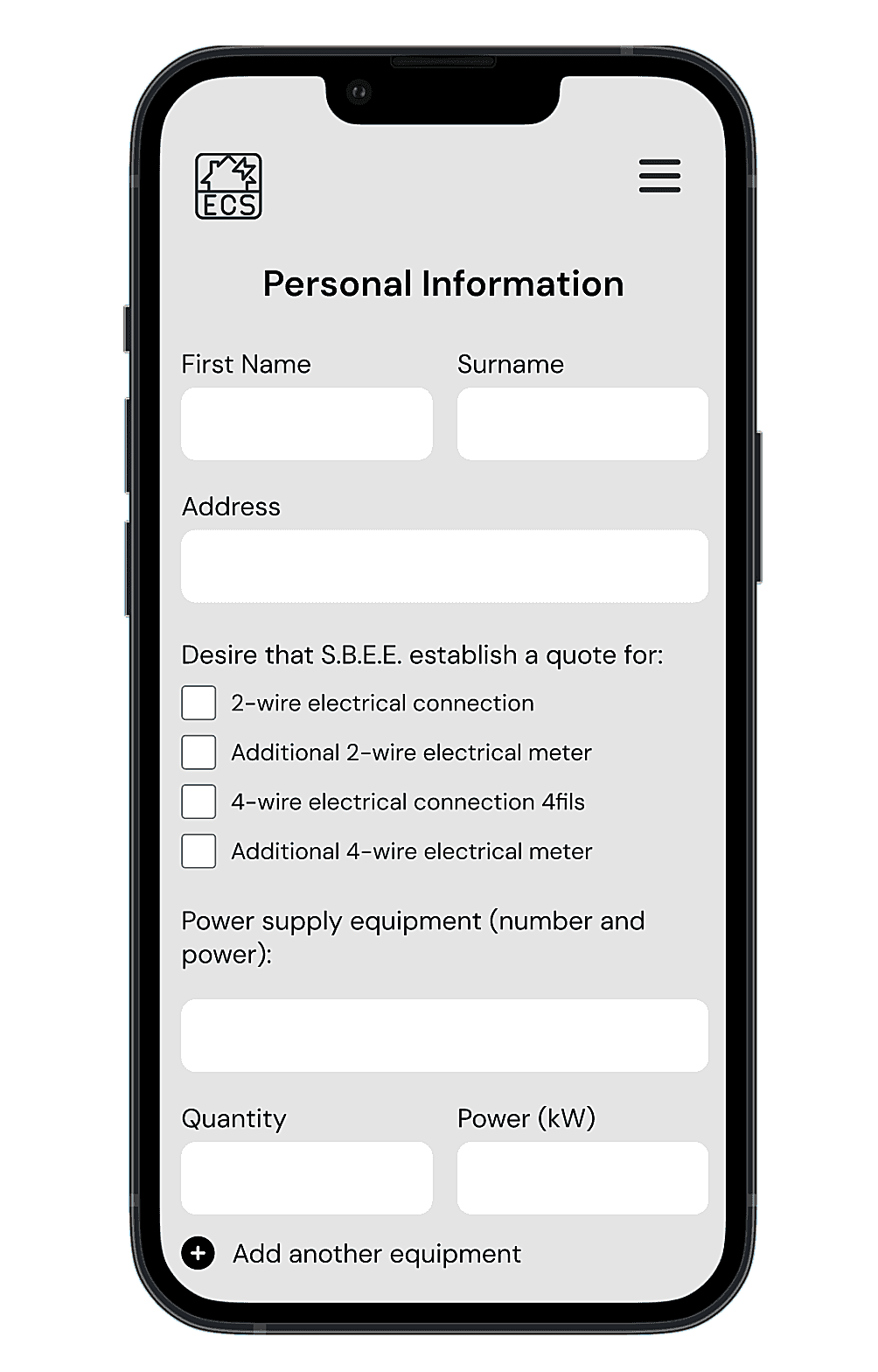
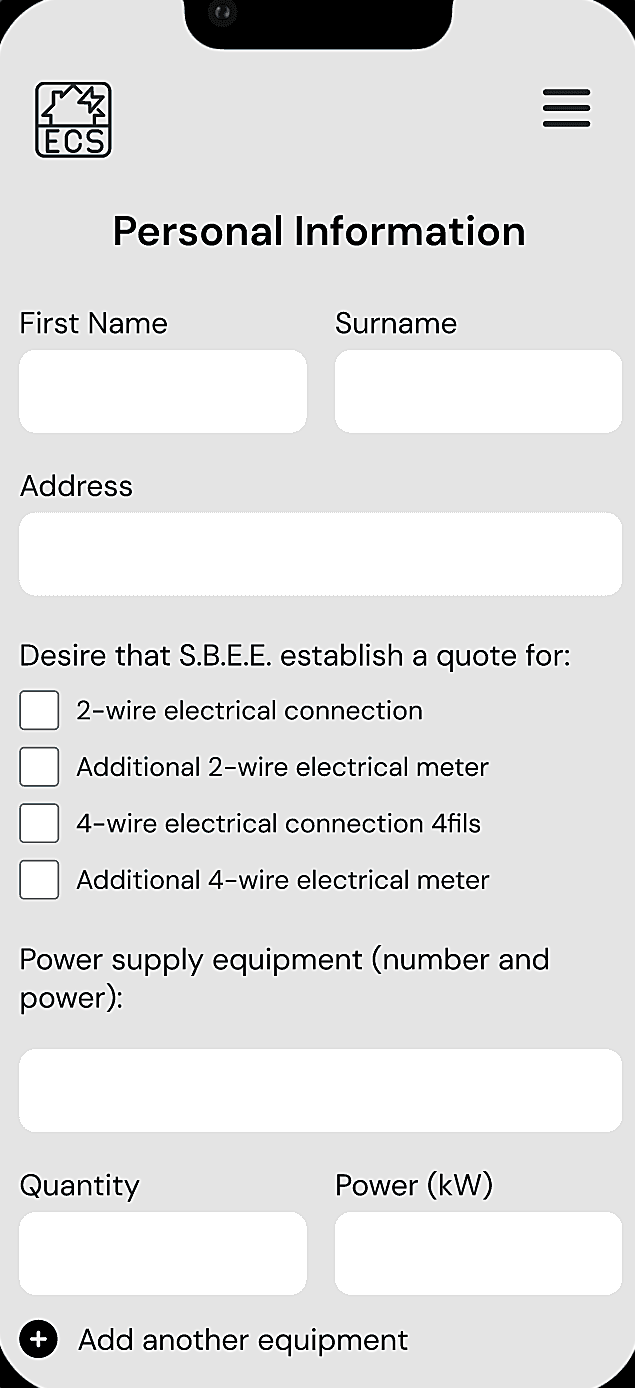
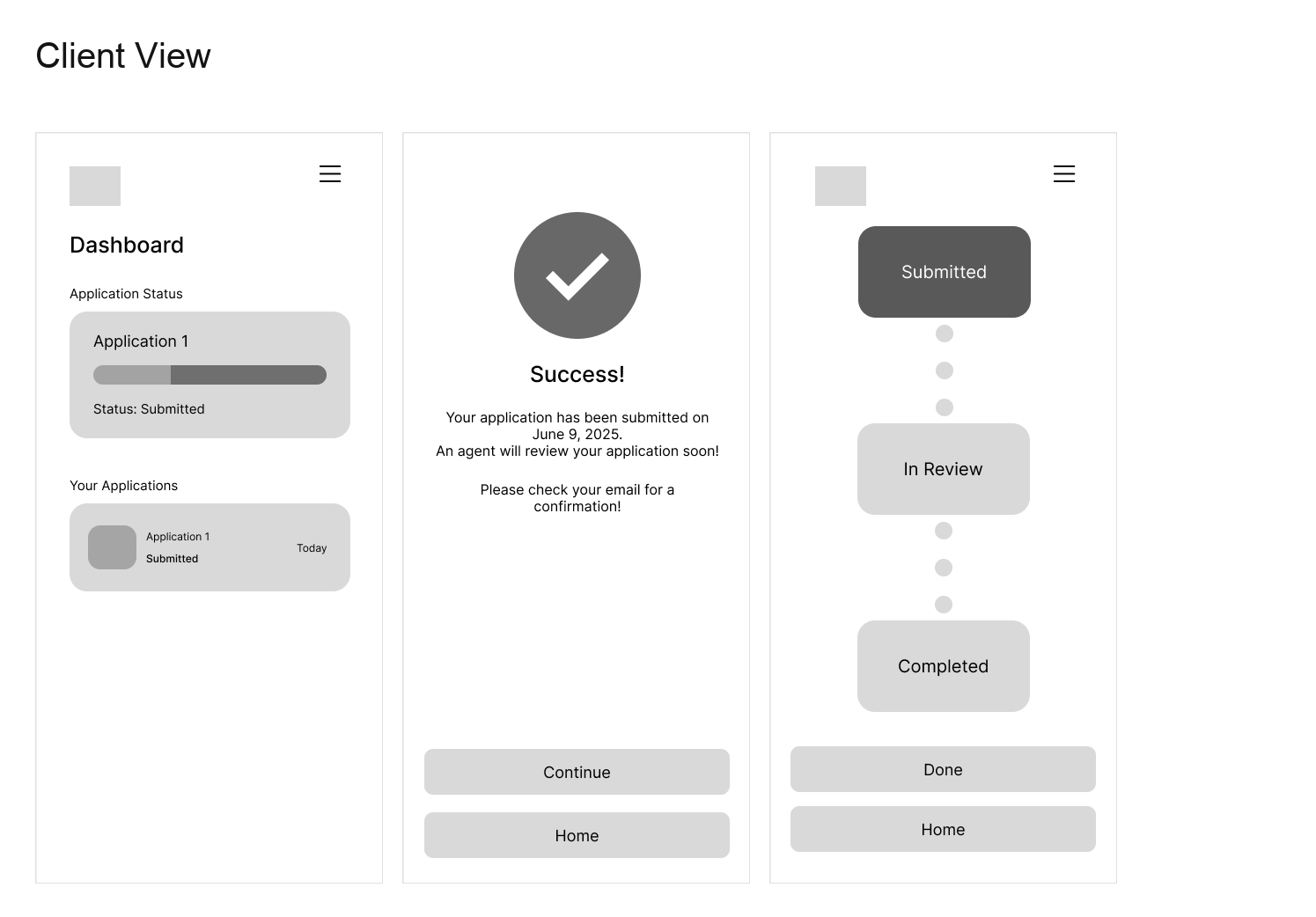
Redesigned applicant flow: log in → start an application → enter household information → upload documents → get a confirmation with a reference number → track status. This replaces paper forms, which gave applicants no confirmation that documents were received and no view of what happens next.
The platform hasn’t been built yet. Once it is, we defined three metrics to measure success: application processing time, number of reported delays, and households successfully connected to electricity.
My contributions
- Designed web and mobile application workflows across three connected roles (applicants, agents, and supervisors), optimized for low-literacy users
- Built personas, journey maps, and end-to-end user flows for each role
- Collaborated with the cross-functional team, including our client, product manager, design manager, and mentor, through weekly reviews
Process
Maintaining Stakeholder Alignment Throughout the Design Process
We met weekly with our client, Jun Wong, a University of Chicago PhD student whose PhD project is SBEE Digital, to review design progress, clarify requirements, and document requested changes. Each cycle included internal critiques with our design mentor before presenting updates to Jun, ensuring alignment throughout the project.
Grounding the Product in Real Workflow Constraints
We worked with Jun to understand the existing electricity application workflow, identify pain points in the process, and define product requirements. This helped us map out the steps applicants and SBEE employees need to complete and where digitization could reduce delays and confusion.
Designing for Distinct User Needs and Expectations
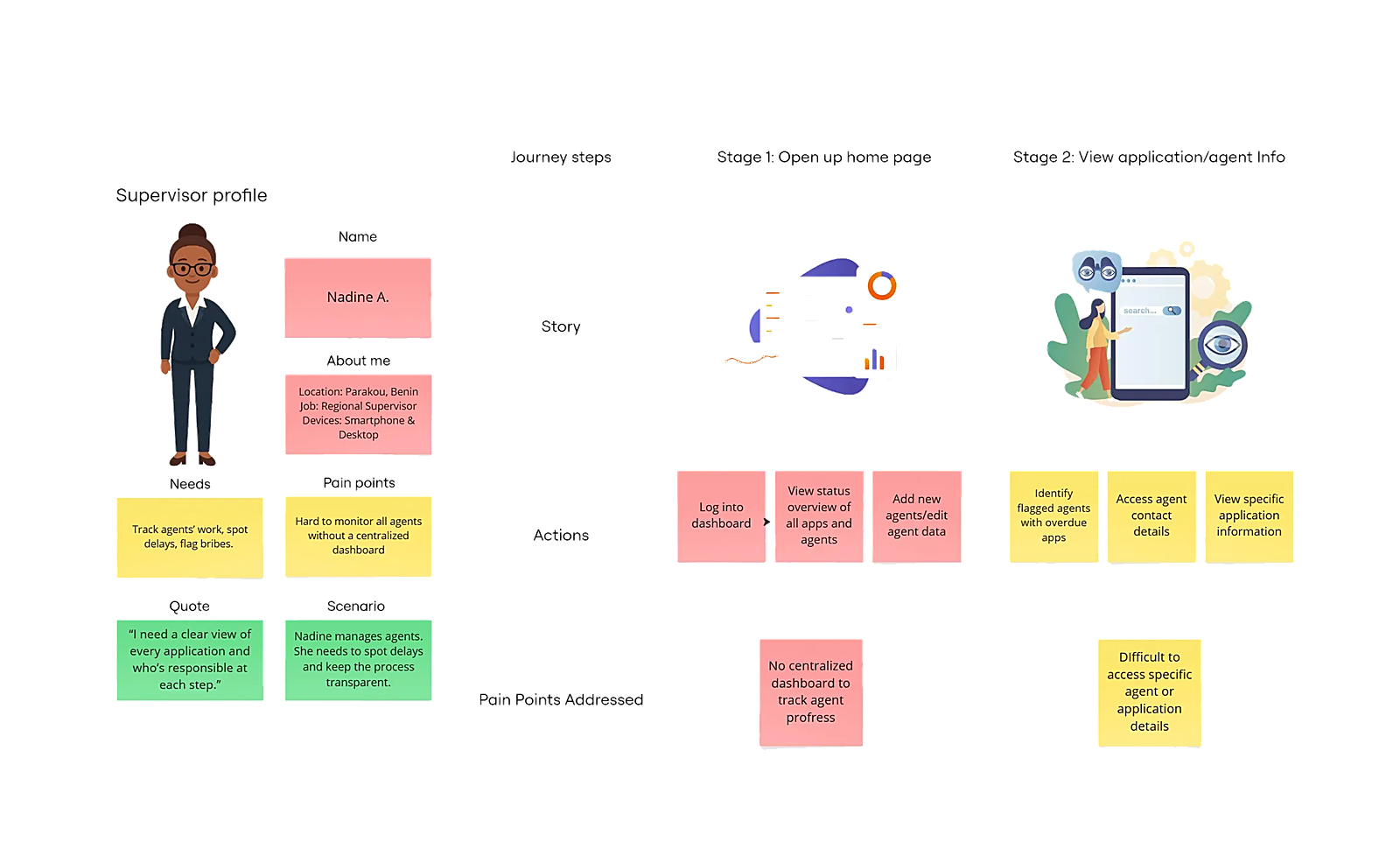
Based on the defined requirements, we created user personas for applicants and SBEE employees. We then mapped their journeys through the application and installation process to identify friction points and opportunities for smoother, more transparent interactions.
Validating Structure and Interactions Before Visual Polish
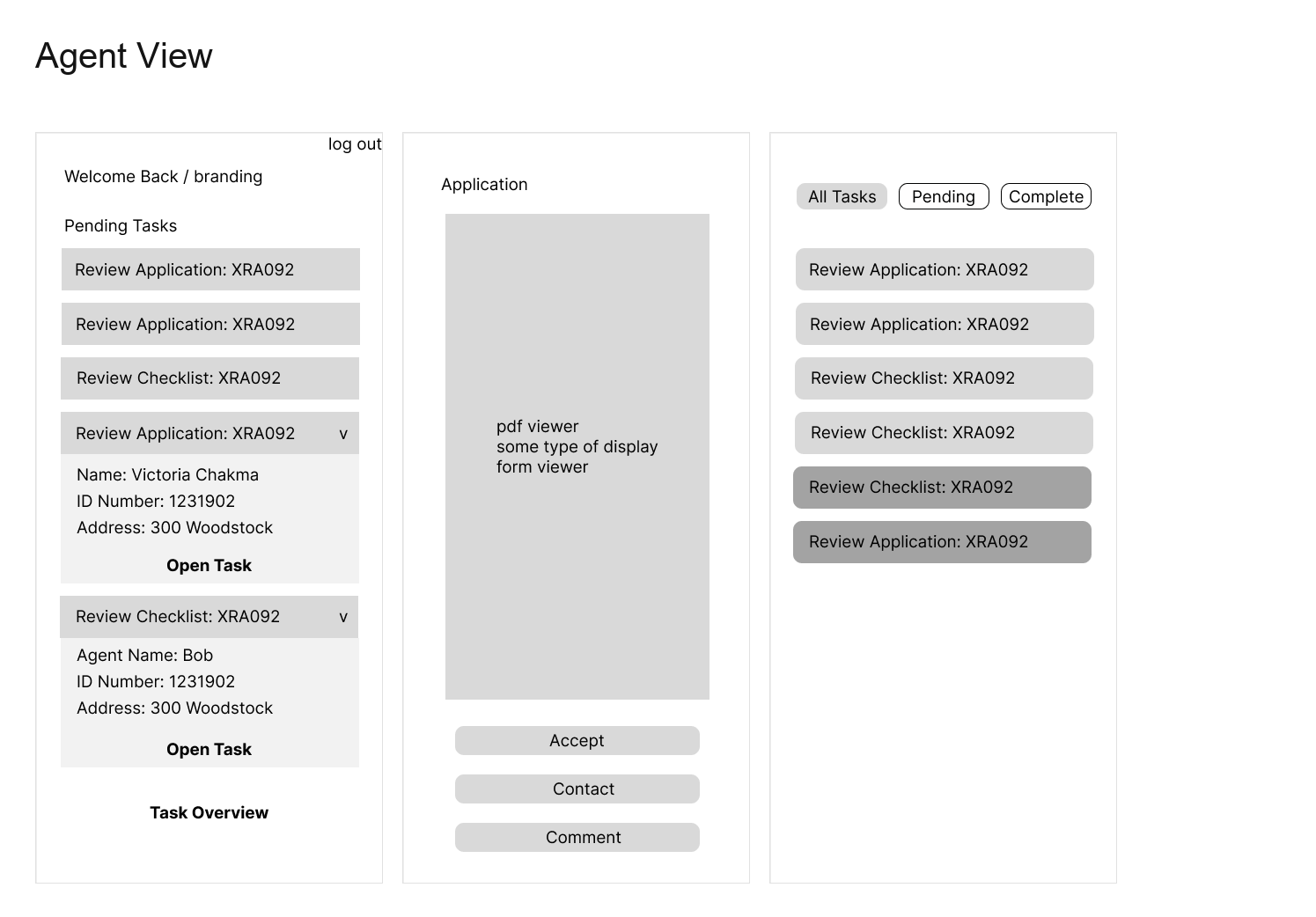
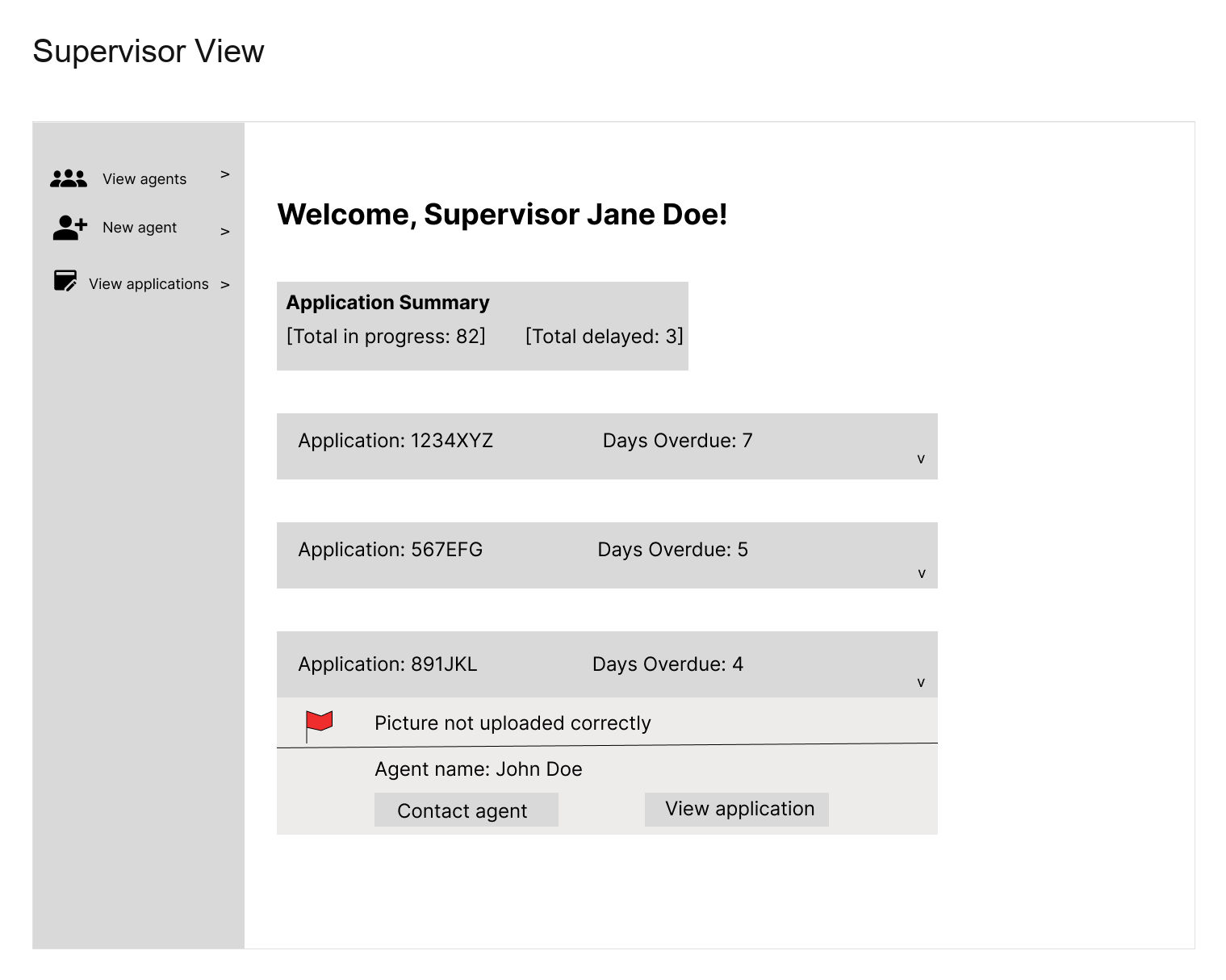
Using the user flows as a foundation, we created low-fidelity wireframes to establish structure, layout, and core functionality. These early sketches allowed us to quickly visualize key screens and interaction patterns.
Establishing Consistency, Accessibility, and Scalability
Many applicants have low digital literacy, and the same platform had to work for applicants, agents, and supervisors on both web and mobile. We extended SBEE’s brand colors with accessible feedback states so errors and application status are clear at a glance, without reading dense text. We also switched to DM Sans for legibility on low-end phones and desktops alike, and built one shared component library so every role sees the same familiar patterns on any device.
Improving Usability and Readiness for Handoff
We iterated on the low-fi wireframes into high-fidelity designs with clearer hierarchy, more intuitive navigation, and consistent visual structure, making key actions easier to find and reducing cognitive load for users. These screens represented the full web and mobile experience and prepared us for handoff and documentation.
Prioritization & tradeoffs
- Built first: the end-to-end path from application to tracking to staff oversight, so every role was covered at a basic level before any single flow was polished.
- Scope: nothing was cut between low-fi and hi-fi. Every flow we wireframed for all three roles made it into the final designs.
- Why: we had a two-month timeline (July – August 2025), and priorities came out of weekly reviews with our client.
- Working with product and design leadership: our product manager kept the team on track and helped us define features, and our design manager reviewed everyone’s designs to keep the platform cohesive across all three roles.
Conclusion
Our team designed a comprehensive, user-friendly web and mobile platform for SBEE's three primary user groups:
- Applicants: can submit electricity connection applications, track progress, and receive updates.
- Agents: can manage inspections, upload documentation, and stay organized.
- Supervisors: can monitor agent performance, flag delays, and ensure transparency.
The final deliverables are responsive desktop and mobile wireframes, detailed user journey maps, and a consistent design system tailored for low- to moderate-technology literacy users in Benin. We expect our designs will help SBEE streamline electricity application processing and increase accessibility. The impact can be measured by reduced application processing time, fewer reported delays, and an increase in the number of households successfully connected to electricity once these designs are implemented within a fully developed application.