Seedly
Seedly bridges the gap between climate awareness and everyday action by helping users turn sustainable intentions into habits. Instead of relying on abstract data, it translates eco-friendly actions into a growing digital garden, making impact visible and personal. The gamified, emotional feedback is designed to keep people coming back and support long-term behavior change.
- Problem
- Sustainability tools rely on abstract metrics like carbon emissions, so people struggle to see their personal impact or stay motivated.
- My role
- I helped ideate the concept and worked with 3 other designers to build the interactive prototype and Framer website.
- What I did
- In 24 hours: review of existing sustainability tools and habit-formation research · concept sketches · user journey mapping in Figma and Figma Make · high-fi designs · an interactive Framer site
- Key decision
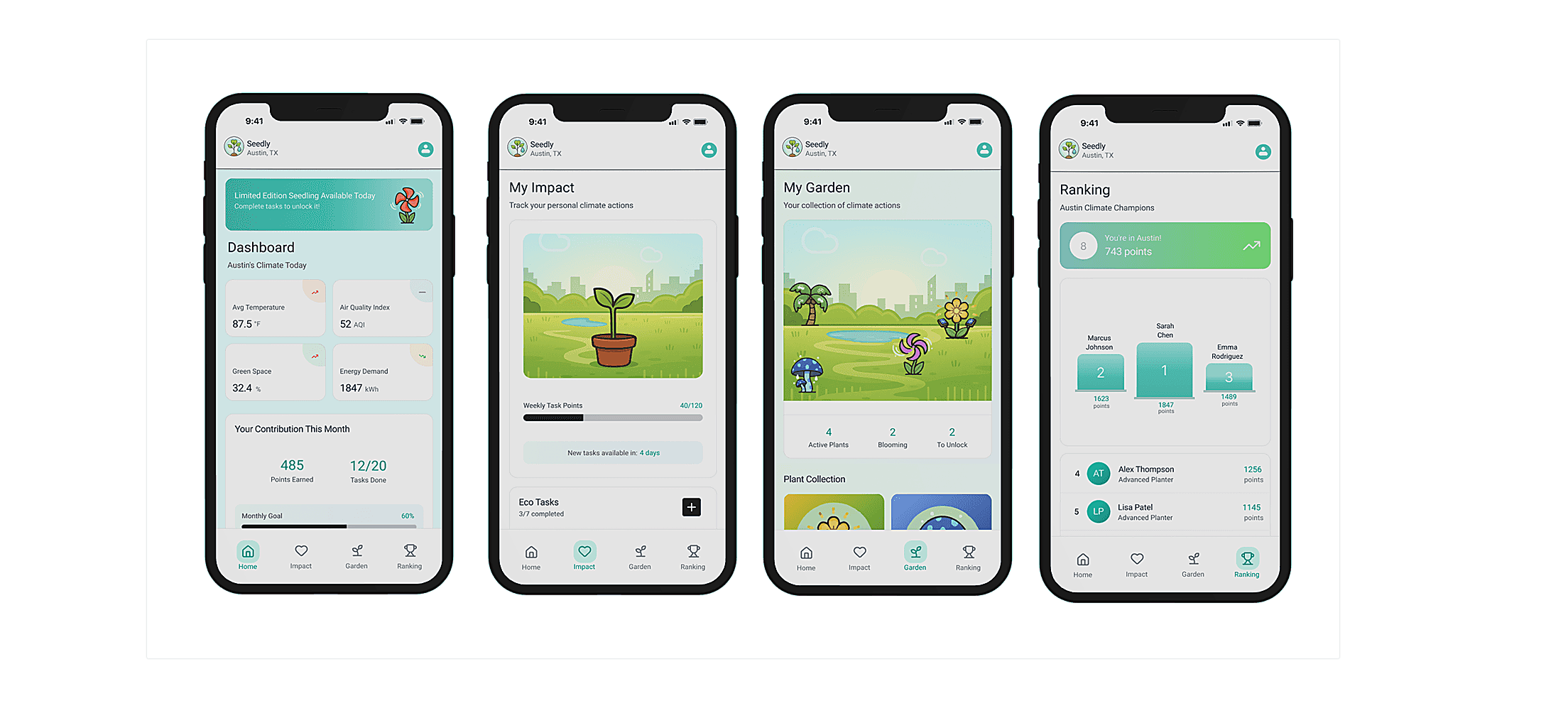
- Show impact as a growing digital garden instead of emissions numbers, because abstract data made progress hard to feel. Visible growth gives immediate, tangible feedback for each action.
- Outcome
- 🏆 Excellence in Innovation Award, out of 12+ competing teams, with high-fi designs, a clickable prototype, and an interactive Framer site.
- Success metrics
- 30-day retention · eco-actions logged per user each week · length of habit streaksMetrics we defined to measure success, not results achieved yet.
Challenge
Existing sustainability tools rely heavily on abstract metrics like carbon emissions, which makes it difficult for users to understand their personal impact or stay motivated. As a result, users struggle to translate intent into consistent action, leading to low engagement and drop-off after initial use.
Outcome
Seedly won the Excellence in Innovation Award at Design @UT’s 24-hour design-a-thon, out of 12+ competing teams. Instead of a pitch deck, we presented an interactive Framer website, along with a clickable prototype, so judges could try the concept firsthand.
The core idea is to reframe sustainable actions as visible, incremental progress in a digital garden, giving immediate, tangible feedback for each action. Because this was a 24-hour competition, we haven’t tested the concept with users yet.
My contributions
- Helped ideate the concept that became Seedly’s digital garden
- Worked with 3 other designers to build the interactive prototype and Framer website
Process
Exploring How Individual Actions Connect to Long-Term Impact
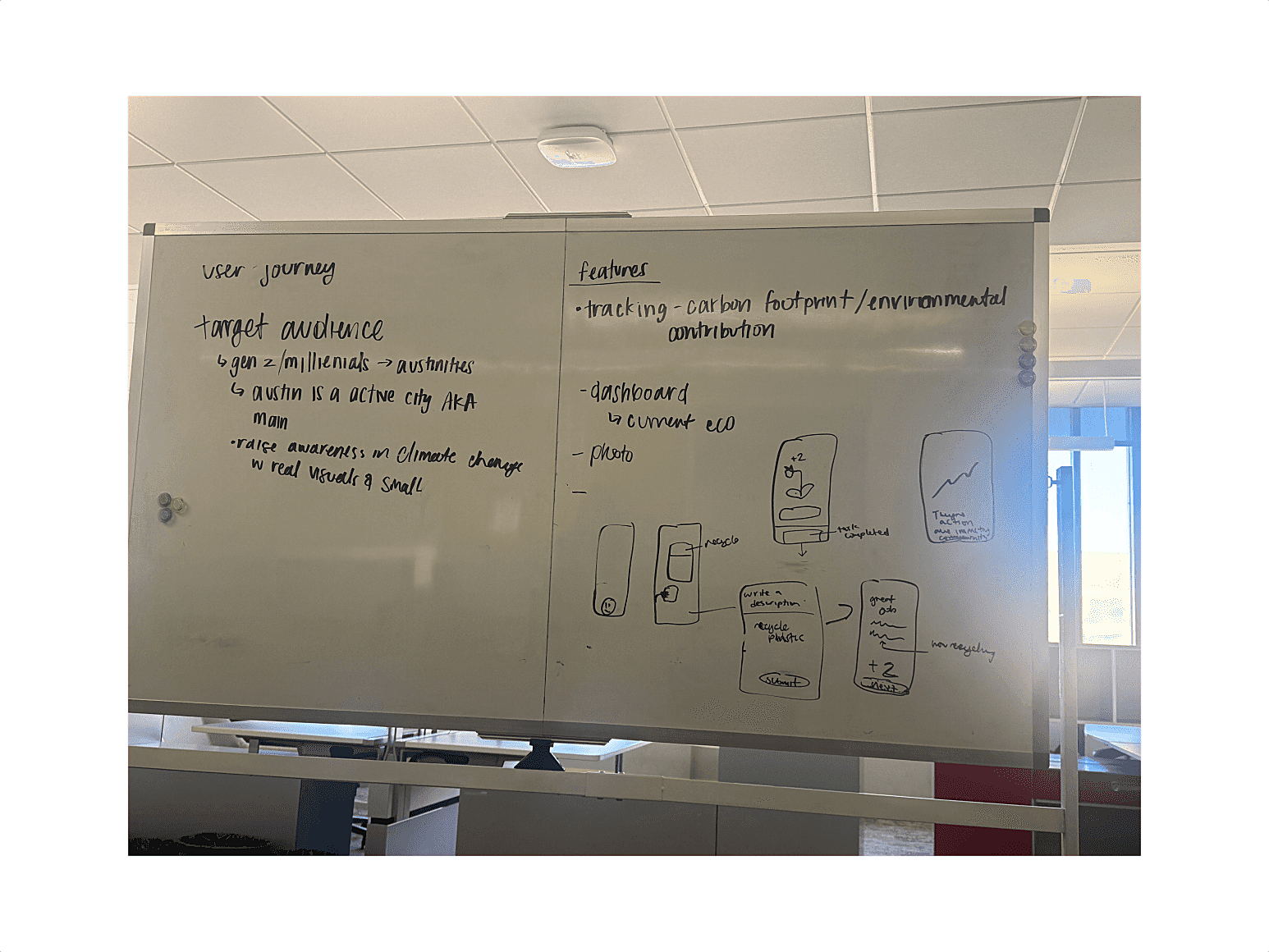
Guided by the prompt Designing Beyond Our Lifetime, we examined existing sustainability tools, behavioral research on habit formation, and common carbon footprint frameworks to understand how people engage with eco-friendly actions. We found that many tools rely on abstract emissions data, making it difficult for users to see the impact of their choices or stay motivated over time. This led us to focus on designing an experience that translates individual actions into visible, meaningful feedback, making sustainability more tangible and engaging.
Translating Abstract Environmental Data into Motivating Concepts
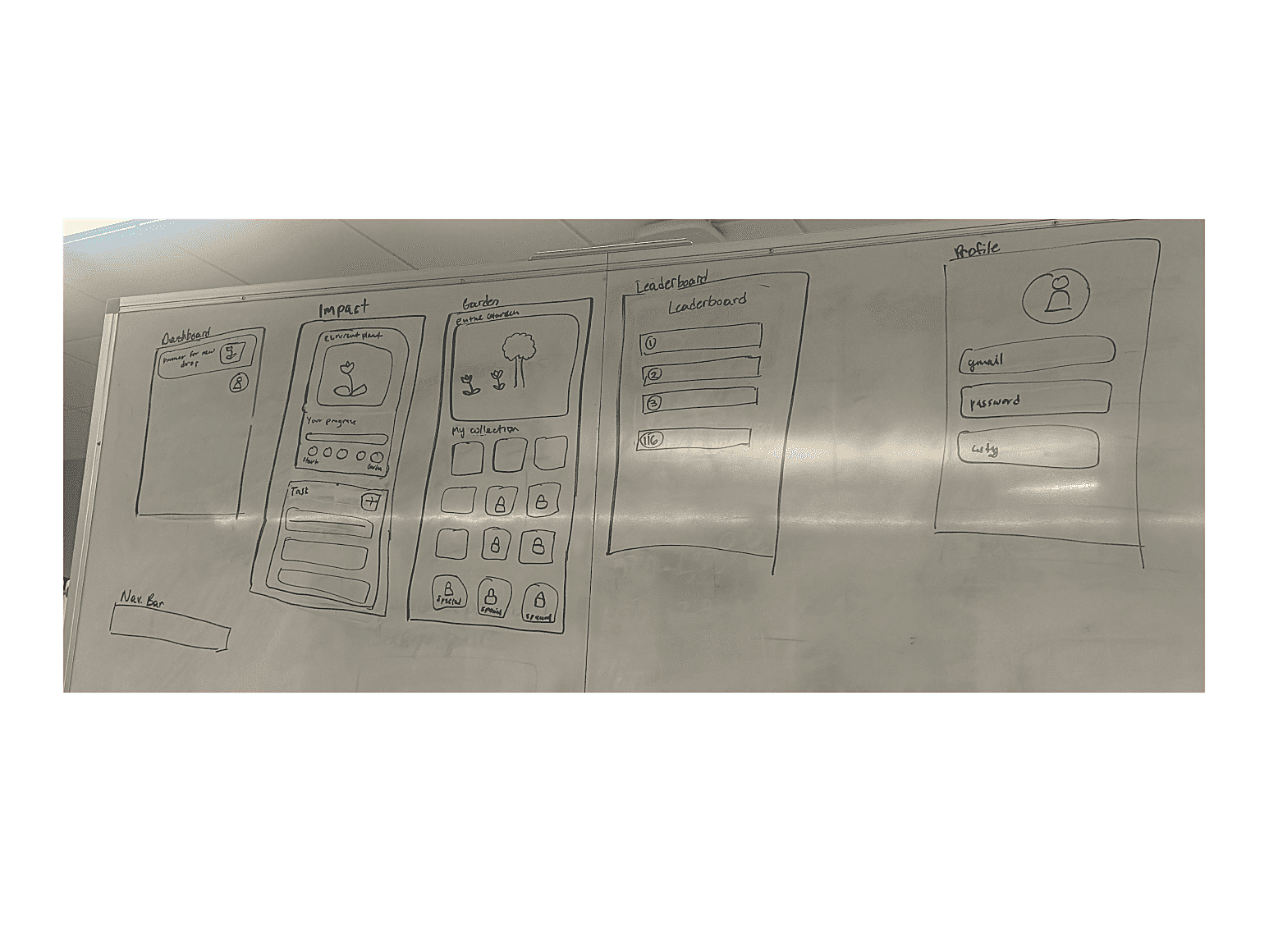
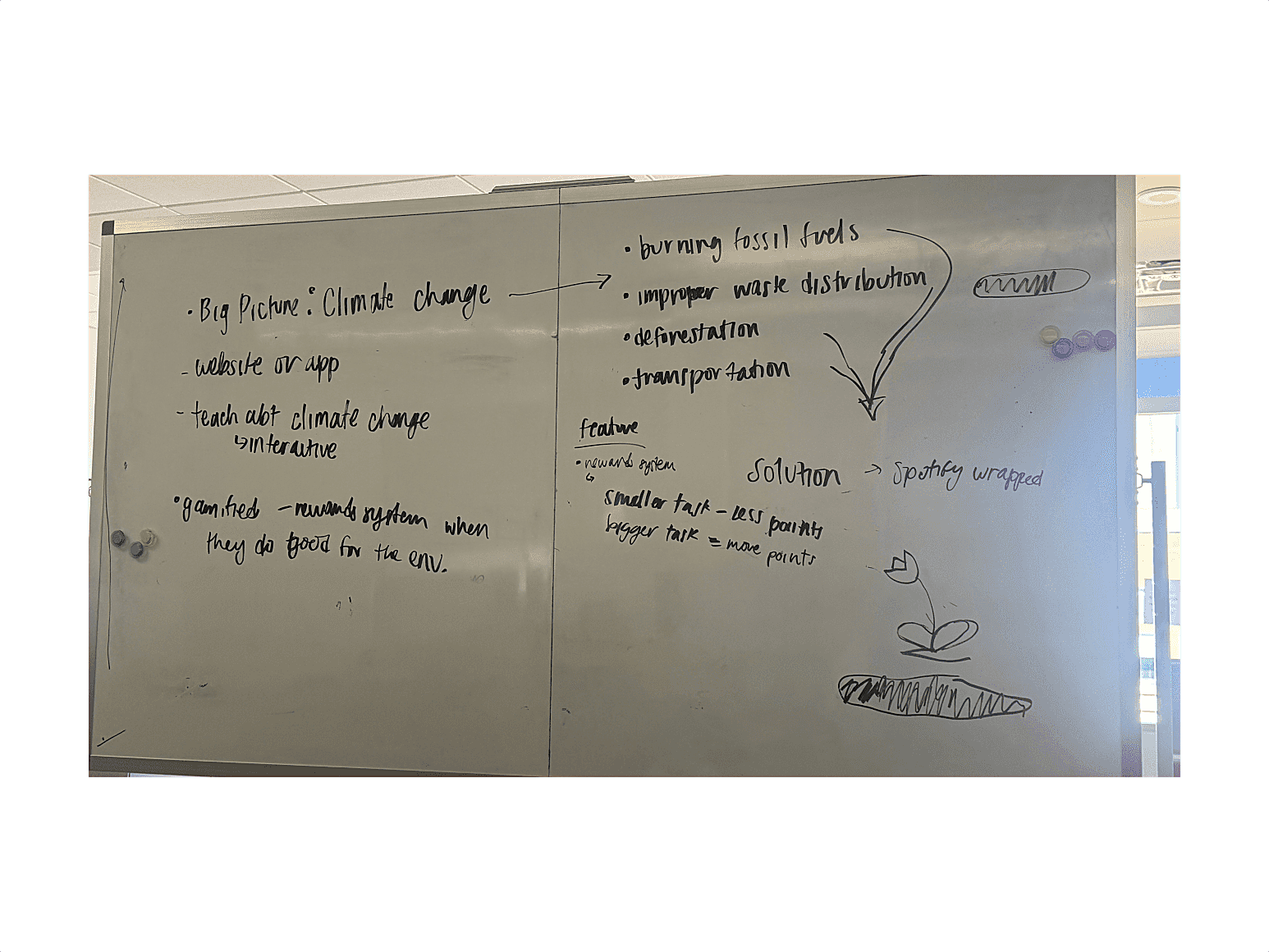
Using research insights, we sketched multiple concepts for visualizing personal climate impact. We explored metaphors before settling on a gamified digital garden, where each completed sustainable action nurtures visible growth. Sketching allowed us to quickly iterate on ideas and align on how to translate abstract environmental impact into a motivating, long-term experience.
Mapping Clear and Intuitive Paths for Action and Feedback
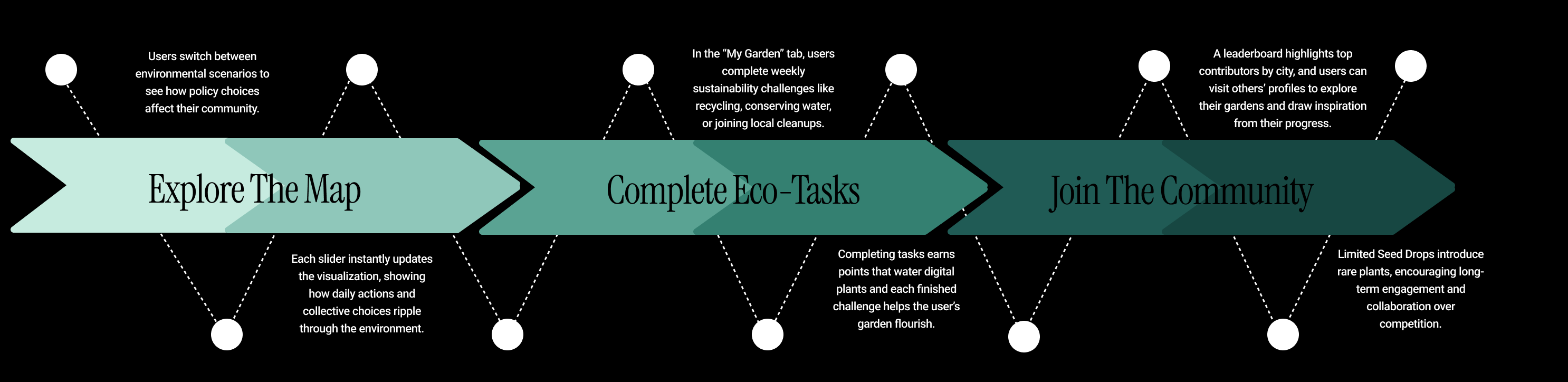
We mapped user journeys from completing tasks to seeing their impact in the digital garden, using Figma and Figma Make to quickly ideate and explore different flow variations. This process helped us test how actions, feedback, and visual growth could connect in a clear and intuitive way, ensuring users could easily track their contributions and understand the cumulative impact of their behavior over time.
Designing Engaging, Tangible Experiences to Reinforce Sustainability
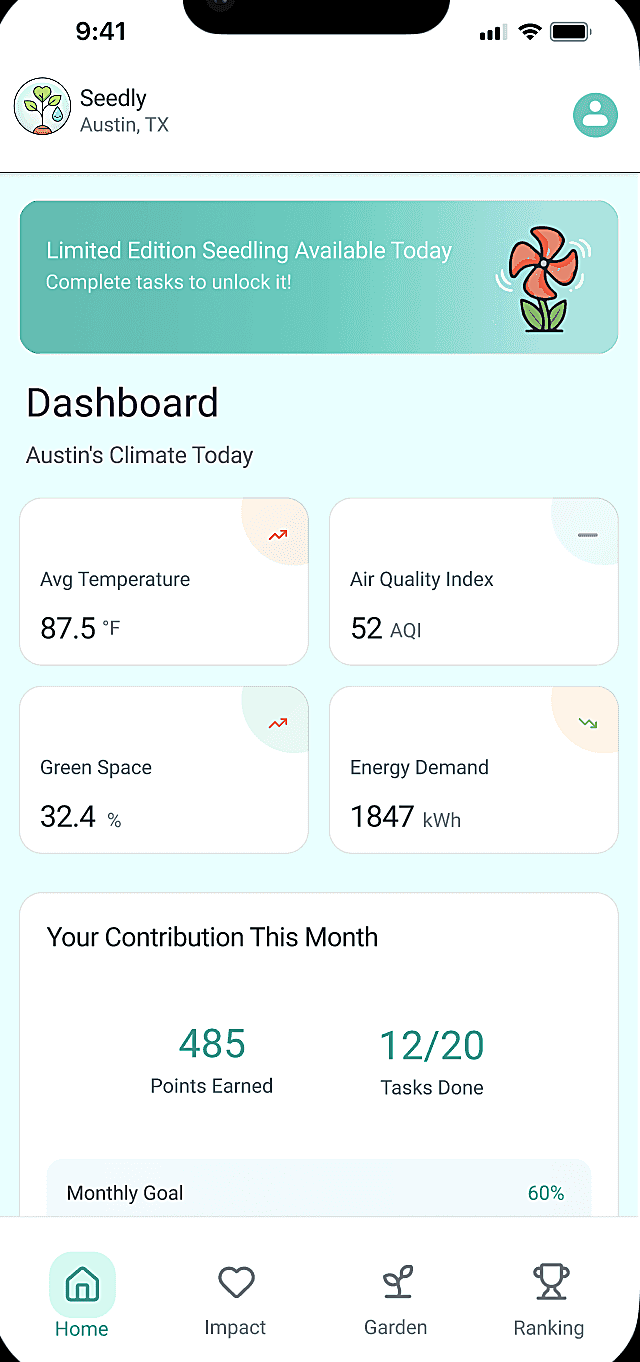
Building on our sketches and user flows, we developed high-fidelity designs that emphasized clarity, engagement, and emotional feedback. The digital garden visually grows with each completed sustainable action, making users' contributions tangible and reinforcing the long-term impact of everyday choices. Instead of creating a traditional pitch deck for the competition, we built an interactive Framer website to present our designs, allowing judges and users to experience the concept firsthand.
View interactive prototype View the Framer sitePrioritization & tradeoffs
- Built first: the core loop of completing an eco-action and watching the garden grow, since that feedback is the whole concept.
- Deferred: the data, behavioral, and civic layers (live climate data, community-wide forecasts, and city partnerships). We presented them as the long-term vision on our Framer site rather than building them into the prototype.
- Presentation tradeoff: we spent competition time on an interactive Framer site instead of a pitch deck, so judges could experience the concept instead of just hearing about it.
- Why: with 24 hours, we focused the prototype on the core loop of completing an eco-task and watching the garden grow.
Conclusion
Through research, sketching, and iterative design, Seedly transforms abstract sustainability goals into a tangible, engaging experience for users. The project resulted in high-fidelity designs and an interactive Framer website that demonstrates key user flows, gamified feedback, and the growing digital garden concept. By making eco-actions visible and motivating, Seedly lays the groundwork for long-term behavior change, showing how individual actions can scale into collective impact and meaningful cultural shifts toward sustainability.